
Manufacturing / Illustrative case study
Industrial IoT for Factory Downtime Monitoring
Capture read-only equipment signals and combine them with production context to help a factory distinguish downtime from planned stops.
Industrial IoT Solutions ↗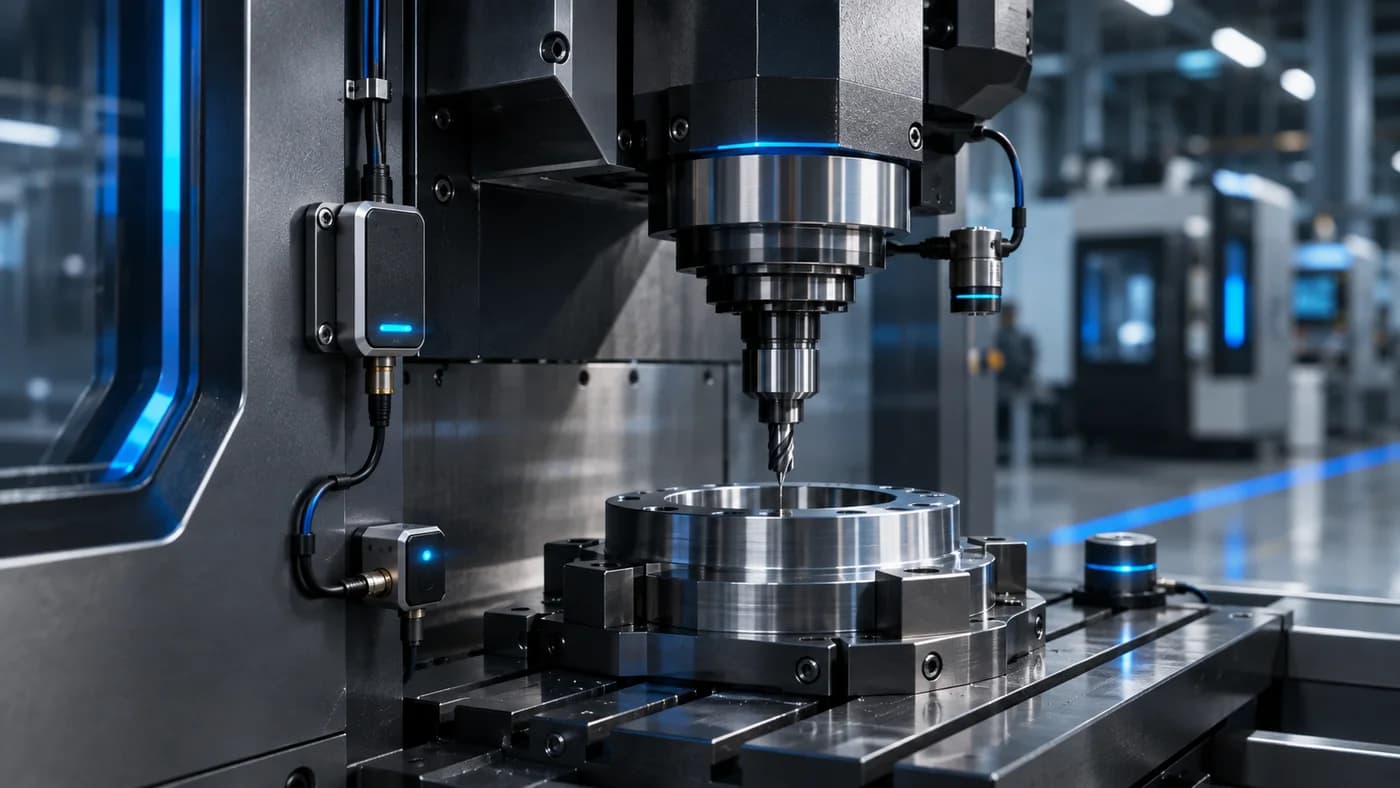
PROJECT BRIEF
The business behind the requirements.
Key participants: Production supervisors, maintenance, controls engineers and IT security.
The pilot covers a representative production cell with machines of different ages. The initial goal is dependable run-state and stop-duration visibility, not autonomous control or predictive failure claims. A site survey would establish available signals, safe connection methods and network restrictions. Operators remain essential to interpreting stop reasons that a sensor alone cannot explain.
01 / THE CONTEXT
Where the friction starts.
In this illustrative factory, shift logs record downtime after the event and use inconsistent reasons. Maintenance teams lack a reliable view of recurring stops. Equipment varies in age and available connectivity.
The constraint that shapes the solution
Monitoring must not interfere with machine control or create an unreviewed path into operational networks. Sensor signals need calibration before they support business decisions.
02 / DESIGN DECISIONS
The proposed COREVA approach.
Each decision addresses a specific failure mode in this scenario.
Use read-only edge collection with buffering for intermittent network access.
Separate machine signals from operator-entered stop reasons and retain both for analysis.
Segment connectivity and define alert ownership, thresholds and escalation windows with operations.
THE WORKFLOW IN PRACTICE
Follow the work through the system.
Collect without disrupting control
An approved read-only connection or sensor captures signals through an edge device. Events are timestamped and buffered locally when the network is unavailable.
Translate signals into events
Debounce and state rules prevent a brief signal fluctuation from becoming multiple stoppages. Operators associate a reason with an observed stop without changing the original sensor history.
Use the evidence in maintenance review
Recurring stops are grouped by machine, shift and reason. Maintenance examines the supporting events before deciding whether a change to procedure or equipment is warranted.
03 / DELIVERY PLAN
Build confidence before expanding scope.
- PHASE 01
Instrument one representative machine and validate timestamps and signal meaning.
- PHASE 02
Compare observed events with operator logs before extending to a production cell.
- PHASE 03
Tune alert thresholds with maintenance staff to prevent a flood of non-actionable notifications.
RISK & RELEASE READINESS
What must be resolved before release.
Incorrect signal interpretation can manufacture downtime that never happened. Clock drift, lost connectivity and sensor calibration must be distinguished from actual equipment behavior. Operational technology access requires site approval and a clear separation from control commands.
Acceptance checks
Observe known machine states alongside recorded data and reconcile event duration. Disconnect the uplink and verify buffered recovery without double counting. Review alert behavior with the people expected to act on it.
Handover & ownership
Provide the signal register, network diagram, calibration assumptions, edge replacement instructions and alert ownership. A maintenance review cadence determines how the collected information changes decisions on the shop floor.
04 / SUCCESS CRITERIA
How we would evaluate the work.
These are proposed measures, not achieved results. Baselines, targets and observation periods would be agreed during discovery.
- Assess event completeness, timestamp drift and edge-buffer recovery.
- Track unexplained downtime and repeated stop categories.
- Review alert usefulness and maintenance response, not simply the number of sensors deployed.
05 / THE TAKEAWAY
What this scenario teaches
Industrial visibility depends on trustworthy signals and operational context. A connected machine is only the start of a useful monitoring system.
Explore Industrial IoT Solutions ↗LET’S APPLY THIS TO YOUR CONTEXT
Similar challenge.
Different business?
Tell us what is happening today and what needs to change. We’ll help shape the scope around your operations.
Talk to COREVA ↗KEEP EXPLORING
Two more ways to approach progress.

AI Support Agent with Human Handoff
Give an AI support agent access to approved knowledge and route uncertain or sensitive requests to a person with the context needed to help.
Explore the scenario
AI Invoice Intake and Approval Automation
Use AI to extract invoice fields and flag exceptions while keeping payment approvals and financial decisions with authorized staff.
Explore the scenario